
Primary, Secondary, and Tertiary Packaging Explained
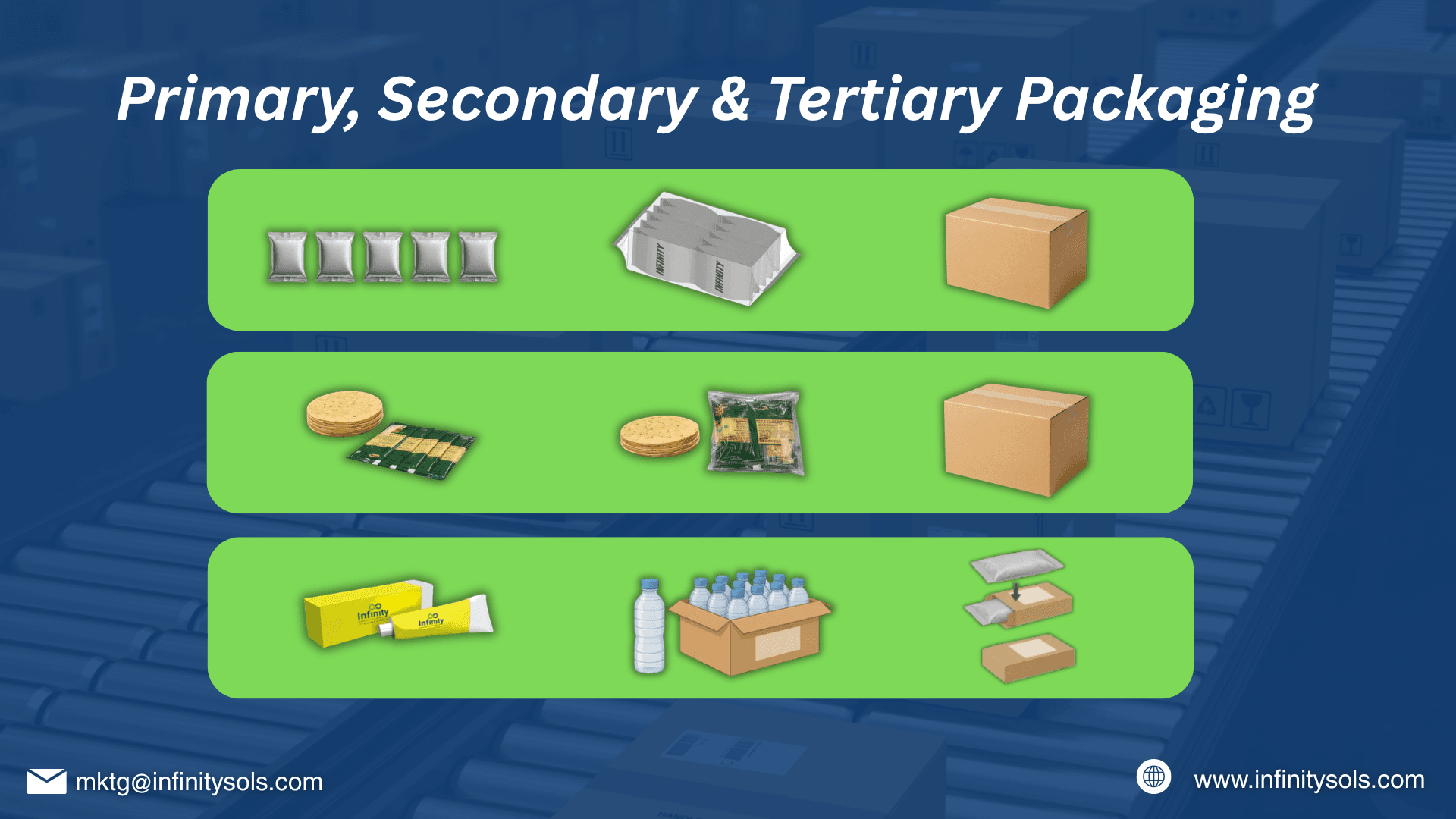
Packaging is not just about wrapping a product. It is a structured system designed to protect, present, and transport goods efficiently. In modern manufacturing, packaging is divided into three essential layers: primary packaging, secondary packaging, and tertiary packaging.
Each layer plays a unique role in ensuring product safety, operational efficiency, and smooth supply chain movement. Understanding these layers helps manufacturers optimize packaging performance and reduce logistics challenges.
Primary Packaging: The First Layer of Protection
Primary packaging is the layer that directly comes in contact with the product. It is responsible for preserving product quality, maintaining hygiene, and providing essential product information to consumers.
Examples of primary packaging include pouches, bottles, sachets, blister packs, cans, and jars. In industries such as food, pharmaceuticals, cosmetics, and FMCG, primary packaging is designed to protect the product from moisture, contamination, air exposure, and physical damage.
This layer also plays a key role in branding, as it carries product details, ingredients, usage instructions, and regulatory information.
In automated production lines, machines like VFFS packaging machines, liquid filling machines, and bottle filling systems are used to create and seal primary packs efficiently.
Secondary Packaging: Grouping for Handling and Display
Secondary packaging is the layer that groups multiple primary packages together. It does not directly touch the product but provides additional protection and easier handling.
Common examples include carton boxes, shrink-wrapped bundles, and pouch bundles. For example, individual sachets of shampoo are grouped into strips or cartons before being sent to retailers.
Secondary packaging improves logistics efficiency by organizing products into manageable units. It enhances stacking, transport stability, and retail presentation.
Machines such as pouch bundling systems, strip bundling machines, cartoning machines, and case packers are used at this stage. Automation in secondary packaging reduces manual labor and improves counting accuracy.
Infinity Automated Solutions Pvt. Ltd. supports manufacturers with advanced secondary packaging and end-of-line packaging machines that improve speed, accuracy, and overall plant productivity.
Watch video : Secondary & Tertiary Packaging
Tertiary Packaging: Bulk Protection for Transportation
Tertiary packaging is the outermost layer used for bulk handling, warehousing, and transportation. It focuses entirely on logistics efficiency and product safety during shipping.
This layer typically includes palletizing, stretch wrapping, strapping, and container loading. It ensures that large volumes of products move safely from manufacturing plants to distribution centers and retail warehouses.
Tertiary packaging prevents product shifting, reduces transit damage, and enables easy forklift handling. In export-oriented industries, strong tertiary packaging is critical for long-distance shipping and international compliance.
Automated palletizers and stretch wrapping machines are commonly used in this stage to improve load stability and reduce labor effort.
How the Three Layers Work Together
Primary, secondary, and tertiary packaging are not independent systems. They function as an integrated packaging structure.
- Primary packaging protects and presents the product.
- Secondary packaging organizes and secures multiple units.
- Tertiary packaging stabilizes bulk shipments for transportation.
In a fully automated plant, the production flow starts with product filling and sealing, moves to bundling or cartoning, and ends with palletizing and stretch wrapping. This structured approach ensures quality control, cost efficiency, and supply chain reliability.
Conclusion
Unveiling the layers of primary, secondary, and tertiary packaging reveals how each stage plays a vital role in the journey of a product. From direct product protection to bulk transportation stability, every layer contributes to quality assurance and supply chain efficiency.
For businesses aiming to scale production and improve logistics performance, investing in a structured and automated packaging system across all three layers is essential for long-term success.