
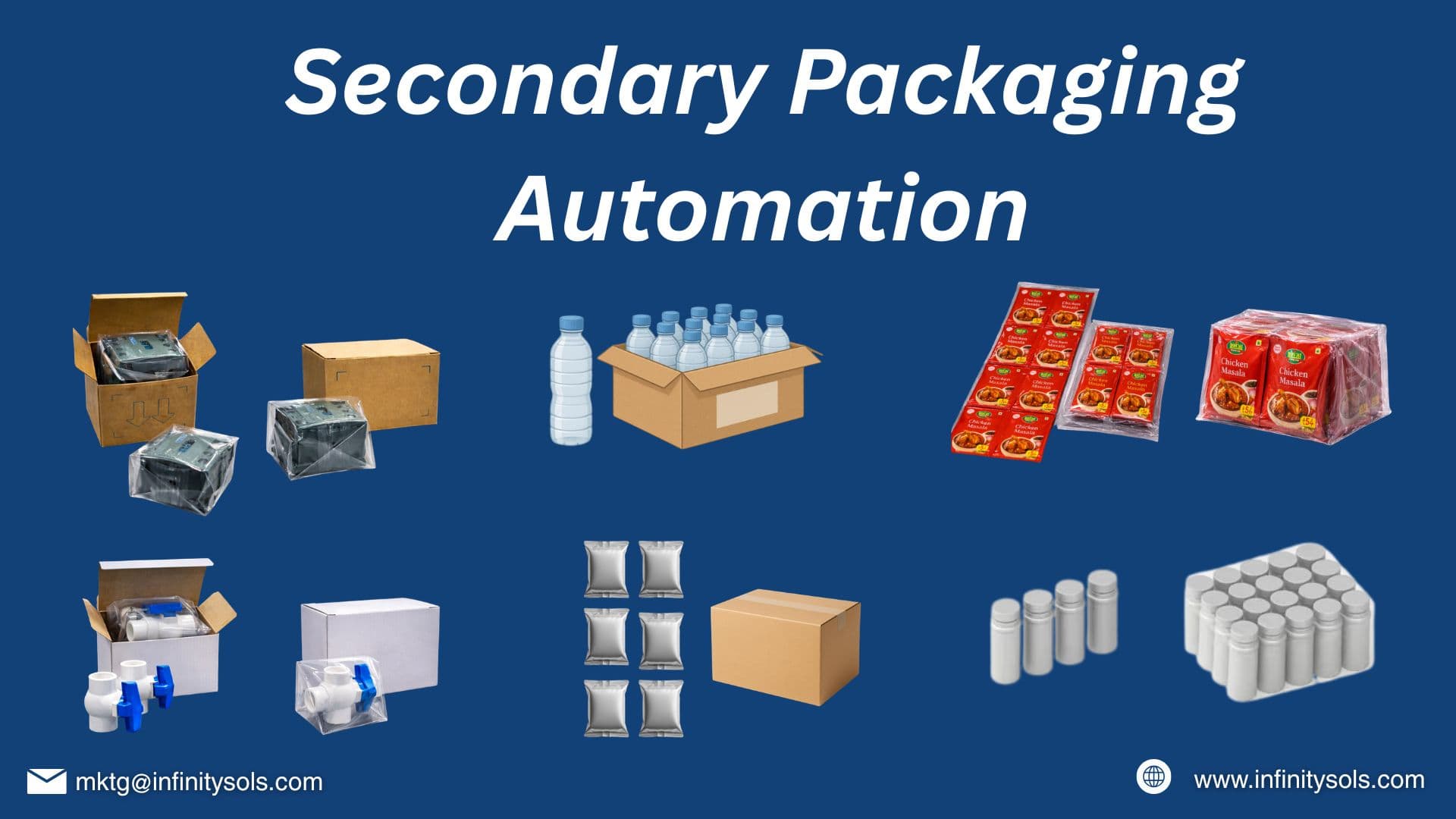
Secondary Packaging Automation: A Complete Guide to Improve Efficiency and Scale Production
In today’s manufacturing environment, packaging is no longer just a final step—it directly impacts productivity, cost, and scalability. Companies relying on manual packaging often struggle with inefficiencies, inconsistency, and rising labor costs.
This is where secondary packaging automation becomes critical.
By integrating systems such as bundling machines, case packers, and cartoning solutions, manufacturers can transform their packaging operations into high-speed, reliable, and scalable processes.
What is Secondary Packaging Automation?
Secondary packaging automation involves grouping and packing primary products such as pouches, bottles, or cartons into secondary units like bundles, cases, or cartons using automated machinery.
It typically includes:
- Bundling and wrapping machines
- Cartoning machines
- Case packing systems
- Shrink wrapping machines
- Conveying and material handling system
Watch Video : Secondary, Tertiary & End-of-Line Packaging Automation
These systems are designed to improve operational efficiency, reduce manual intervention, and ensure consistent packaging output across production lines.
Challenges with Manual Packaging
Many manufacturing units still depend on manual packaging processes, which creates several operational challenges:
- Low production speed
- High dependency on labor
- Inconsistent packaging quality
- Frequent errors and rework
- Bottlenecks in production lines
As demand increases, these inefficiencies directly affect profitability and scalability.
How Secondary Packaging Automation Solves These Challenges
Increased Production Efficiency : Automated systems enable continuous operations, eliminating bottlenecks and significantly improving throughput.
Reduced Labor Dependency : Automation minimizes manual handling, improving accuracy, safety, and overall efficiency.
Consistent Packaging Quality : Machines ensure uniform packaging, reducing product damage and improving brand presentation.
Seamless Line Integration: Modern systems integrate easily with primary packaging machines and conveyors, enabling complete end-of-line automation.
Scalability and Flexibility : Automated systems can handle multiple product types and packaging formats, making them suitable for growing production needs.
Key Machines in Secondary Packaging Automation
A complete secondary packaging line typically consists of:
Bundling and Wrapping Machines: Used for grouping products such as pouches or bottles into organized bundles.
Cartoning Machines : Automate the process of placing products into cartons and sealing them.
Case Packing Machines : Pack products into shipping cartons efficiently for transportation.
Shrink Wrapping Machines: Provide secure and compact packaging for improved handling and logistics.
Conveying Systems: Ensure smooth and continuous product flow across the packaging line.
These solutions are often implemented as integrated end-of-line systems rather than standalone machines.
Industries Benefiting from Secondary Packaging Automation
Secondary packaging automation is widely adopted across multiple industries, including:
- FMCG
- Food and beverage
- Pharmaceuticals
- Personal care
- Industrial and automotive
These industries require high-speed, accurate, and reliable packaging solutions to meet increasing demand and maintain quality standards.
Return on Investment
Investing in secondary packaging automation delivers long-term benefits:
- Faster production cycles
- Reduced labor costs
- Lower rejection and damage rates
- Improved operational efficiency
- Better supply chain performance
Manufacturers typically achieve significant cost savings and productivity improvements after automation.
Why Choose Advanced Packaging Automation Solutions
Modern manufacturing requires more than standalone machines. It requires integrated and customized automation systems.
A reliable solution provider offers:
- Customized packaging solutions
- Integration with existing production lines
- High-performance and durable machines
- After-sales support and service
- Proven industry experience
With extensive experience and installations across industries, advanced automation providers deliver reliable and scalable packaging solutions.
Future of Secondary Packaging Automation
The future of packaging automation is driven by:
- Smart and connected systems
- Robotics and intelligent automation
- Flexible packaging formats
- High-speed production requirements
Manufacturers adopting automation today are building efficient and future-ready operations.
Conclusion
Secondary packaging automation is no longer optional for manufacturers aiming to stay competitive. It directly impacts productivity, cost efficiency, and scalability.
By upgrading from manual processes to automated systems, companies can improve output, reduce operational costs, and ensure consistent packaging quality.
If you are looking to improve your packaging efficiency and scale your operations, it is the right time to invest in secondary packaging automation. Connect with Infinity Automated Solutions to explore customized solutions for your packaging line and achieve long-term operational excellence.