
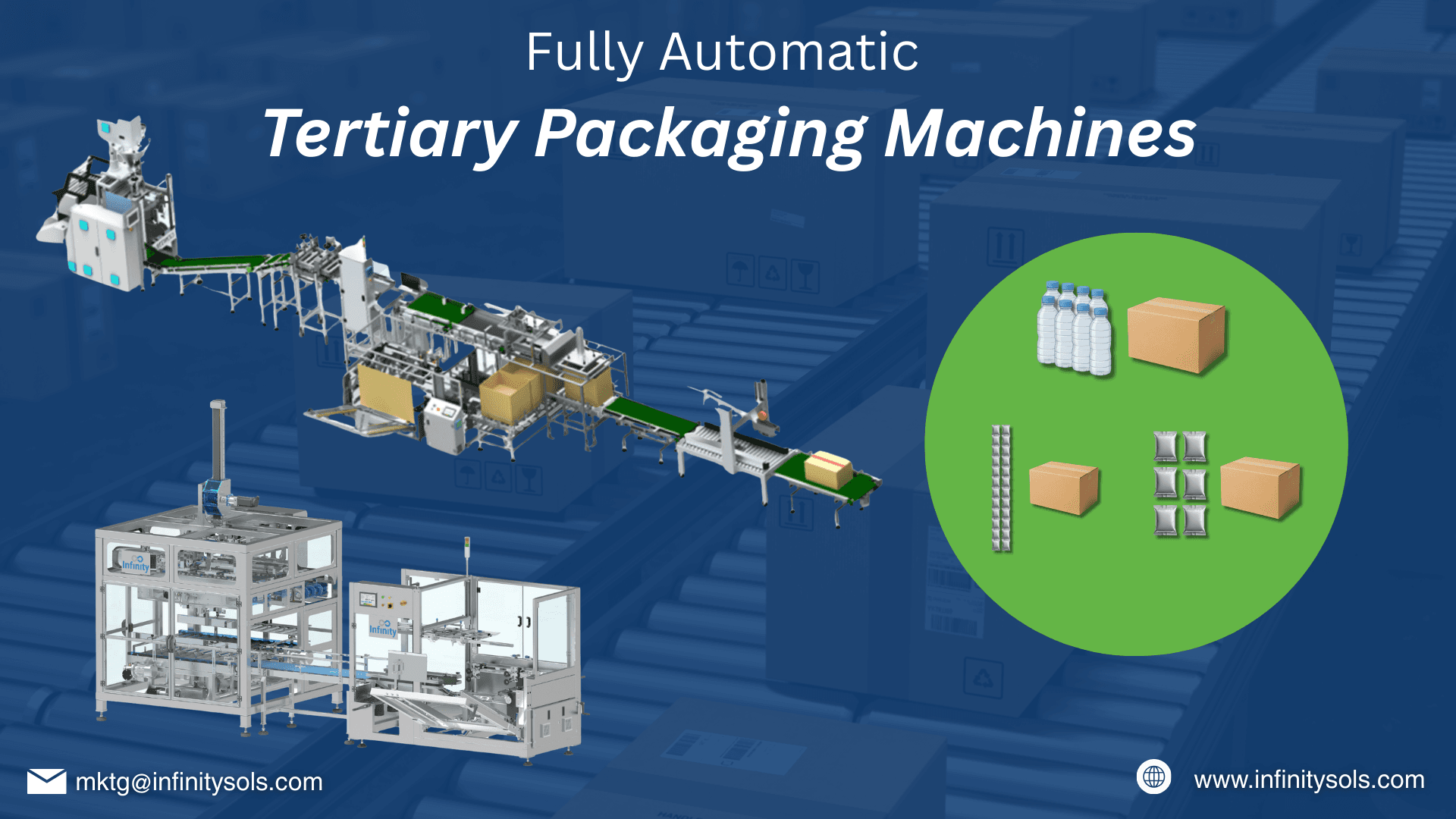
Tertiary Packaging: Final Layer That Protects Your Products
Tertiary packaging is the outermost level of packaging used to protect, store, and transport bulk quantities of products safely across the supply chain. While primary packaging holds the product and secondary packaging groups it, tertiary packaging ensures that large volumes of goods move efficiently from factory to warehouse to distributor without damage.
It is mainly used for bulk handling, shipping, export, and long-distance transportation. Tertiary packaging focuses on stability, load strength, and protection rather than product display.
Difference Between Primary, Secondary, and Tertiary Packaging
Primary packaging directly contains the product, such as a pouch, bottle, or sachet. Secondary packaging groups multiple primary units together, such as bundled pouches, shrink-wrapped packs, or cartons.
Tertiary packaging combines multiple secondary packs into large shipping units using pallets, stretch wrap, strapping, or containerization. It is designed for logistics efficiency rather than retail presentation.
What is Included in Tertiary Packaging?
Tertiary packaging typically involves:
- Palletizing of cartons or cases
- Stretch wrapping for load stability
- Strapping for reinforcement
- Corner protection for edge safety
- Container loading for export
The main objective is to secure products in bulk and prevent movement or damage during handling and transportation.
Watch Video : Tertiary Packaging
Role of Tertiary Packaging in Supply Chain
Tertiary packaging plays a major role in warehousing and distribution. It allows:
- Easy forklift handling
- Efficient stacking in warehouses
- Better space utilization in trucks and containers
- Reduced product breakage during transit
- Faster loading and unloading operations
For industries exporting goods or distributing across large geographic regions, strong tertiary packaging ensures product integrity and customer satisfaction.
Palletization: Core of Tertiary Packaging
Palletization is the foundation of tertiary packaging. In this process, cartons or cases are arranged in a specific pattern on pallets to maintain balance and load stability.
Automatic palletizing systems improve speed and ensure consistent stacking patterns. This reduces labor effort and increases safety in the packaging plant.
Pallets may be made of wood, plastic, or metal depending on load requirements and export regulations.
Stretch Wrapping and Strapping
After palletizing, stretch wrapping is commonly used to secure the load. A stretch film tightly wraps around the palletized stack, preventing shifting during movement.
Strapping adds extra strength by tightly binding cartons or cases together. This is especially important for heavy products or export shipments.
Together, these systems provide strong load containment and protection from dust and moisture.
Tertiary Packaging in Automated End-of-Line Systems
In modern manufacturing facilities, tertiary packaging is part of a fully automated end-of-line solution.
The flow typically follows this sequence:
- Products are filled and sealed in primary packaging.
- They are grouped in secondary packaging through bundling, cartoning, or case packing.
- Finally, palletizing and stretch wrapping systems complete the tertiary packaging stage.
This automation increases efficiency, reduces human error, and improves workplace safety.
Industries That Rely on Tertiary Packaging
Tertiary packaging is essential in industries such as:
- FMCG and food processing
- Pharmaceutical manufacturing
- Beverage industry
- Personal care products
- Chemical and industrial goods
Any industry dealing with bulk distribution or export relies heavily on strong tertiary packaging systems.
Benefits of Strong Tertiary Packaging
Proper tertiary packaging ensures:
- Maximum product protection
- Reduced transit damage
- Improved warehouse management
- Lower logistics costs
- Better load stability during shipping
It directly impacts supply chain efficiency and brand reliability.
Conclusion
Tertiary packaging is the final and most critical stage in the packaging process for bulk handling and transportation. While it may not be visible to end customers, it plays a vital role in protecting products during storage and transit.
For manufacturers aiming to optimize logistics, reduce losses, and improve operational efficiency, investing in advanced tertiary packaging systems such as palletizing and stretch wrapping is essential.