
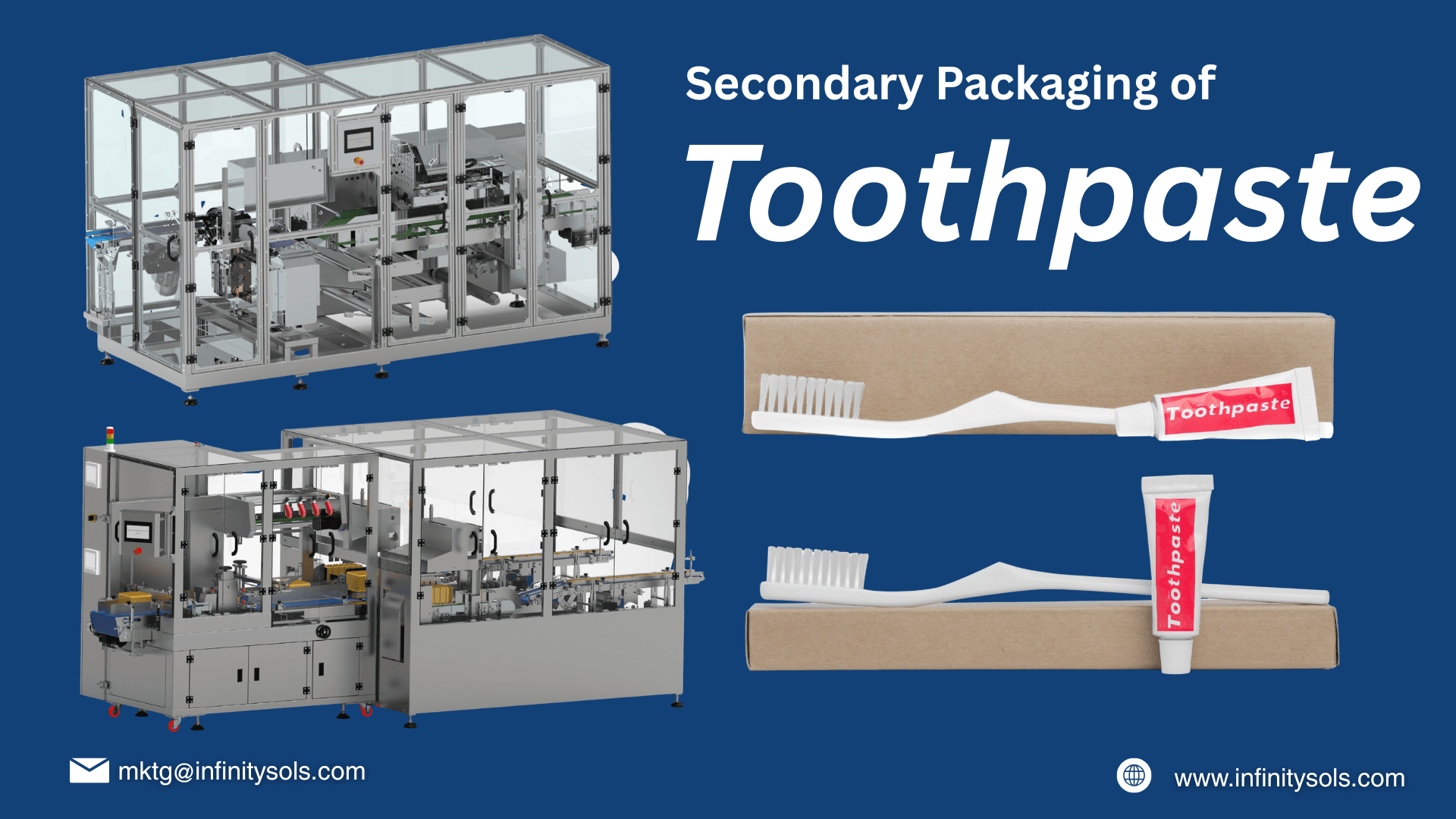
Secondary Packaging of Toothpaste : Paste To Box Automation
Toothpaste is one of the highest-volume FMCG products manufactured globally. After the tube is filled and sealed, it is placed inside a printed carton as primary packaging. The next crucial step is secondary packaging of toothpaste, where these cartons are grouped, protected, and prepared for transportation and retail distribution.
In large consumer markets like India, toothpaste manufacturers operate high-speed production lines. Efficient secondary packaging is essential to manage volume, reduce manual handling, and ensure safe delivery to distributors and retailers.
Role of Cartoning Machine in Toothpaste Packaging
Automatic cartoning machine plays a critical role in the secondary packaging process. It automatically inserts toothpaste tubes into pre-formed cartons and seals them securely. This ensures consistent packaging quality, precise alignment, and higher production speed.
For manufacturers producing multiple SKUs, modern cartoning machines allow quick size adjustments and smooth changeovers. Automated cartoning improves hygiene, reduces labor costs, and maintains uniform product presentation.
Importance of Case Packing Machine in End-of-Line Automation
After cartoning, the next step in secondary packaging of toothpaste is case packing. A case packing machine automatically groups multiple toothpaste cartons and places them into corrugated shipping boxes. This process ensures structured packing for bulk transport and warehouse stacking.
Case packing machines reduce product damage during transit and improve loading efficiency. They also support high-speed production environments by synchronizing with upstream cartoning lines.
Integration with Complete Secondary Packaging Systems
In advanced toothpaste manufacturing plants, secondary packaging is fully automated. Pouch bundling machine systems may be used for promotional toothpaste sachets. A strip bundling machine can create retail-friendly sample strips. For multipack promotions, a shrink wrapping machine secures grouped cartons tightly.
An automatic bagging machine may collect bundled products into larger bags for wholesale distribution. An automatic baling machine helps manage packaging waste efficiently within the facility.
All products move through automated conveying systems that connect cartoning and case packing units seamlessly. Checkweighers are integrated to verify carton and case weight accuracy before dispatch, ensuring compliance and shipment precision.
Companies like Infinity Automated Solutions Pvt Ltd specialize in providing case packing, cartoning, conveying, and checkweighers as part of complete end-of-line automation solutions for FMCG manufacturers.
Business Benefits for Toothpaste Manufacturers
Investing in automated secondary packaging of toothpaste increases output speed and reduces manual errors. It ensures consistent case formation, improved product protection, and optimized warehouse management.
For B2B toothpaste manufacturers supplying modern trade, distributors, and export markets, reliable case pack and cartoning machine solutions ensure faster dispatch and scalable operations.
Conclusion
Secondary packaging of toothpaste is a critical stage in high-volume FMCG production. By integrating advanced cartoning machines, case packing machines, conveying systems, and checkweighers, manufacturers can achieve efficient and reliable packaging performance.
In today’s competitive oral care market, strong secondary packaging ensures toothpaste products reach customers safely, neatly packed, and ready for retail shelves.