
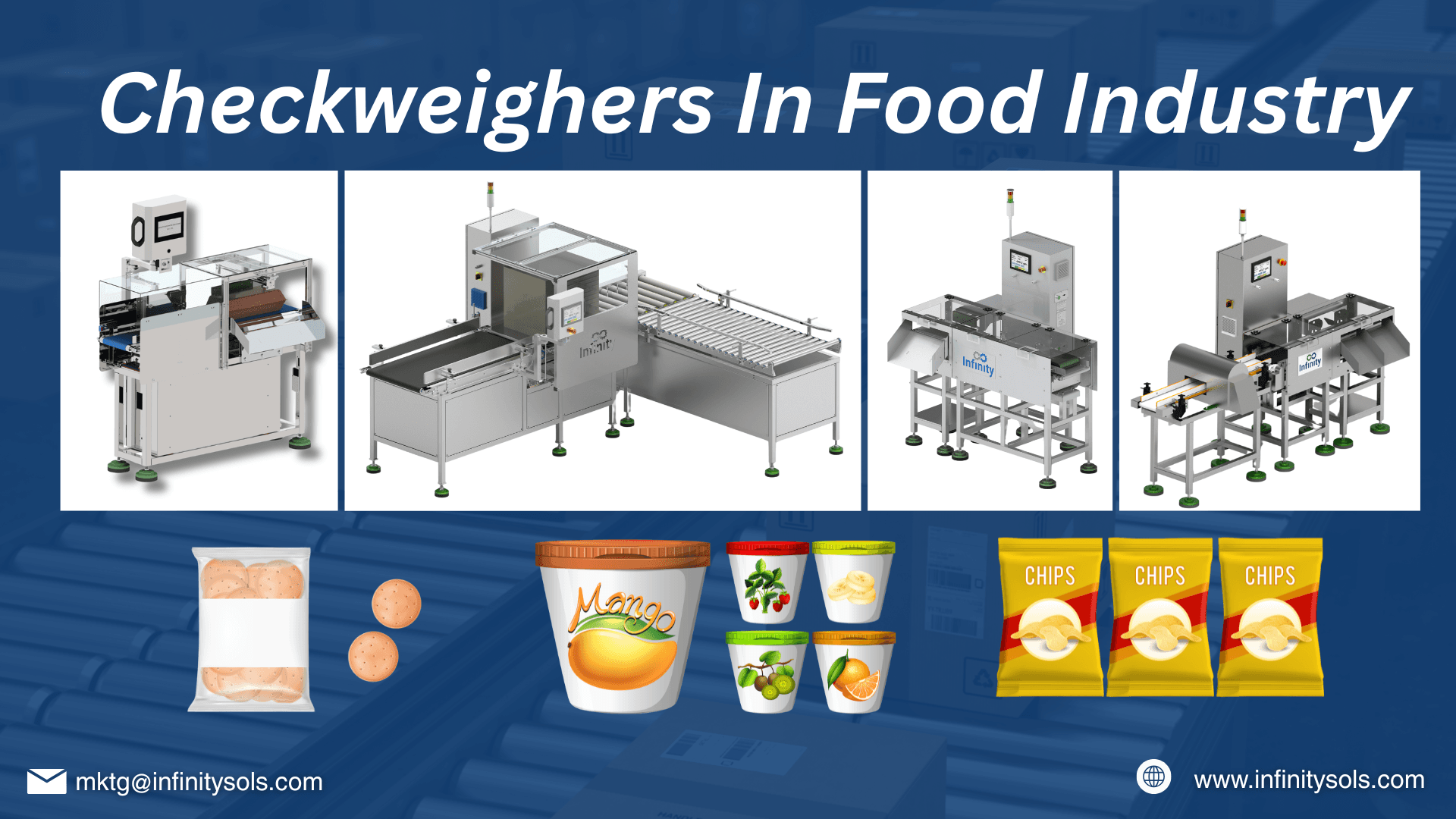
Check Weighing Machines in Food Industry: Accuracy & Safety
In the food processing industry, weight accuracy is not just about quality; it is about consumer trust, legal compliance, and profitability. Check weighing machines in food processing play a critical role in verifying that every packed product meets the declared weight before it reaches the market.
From snacks and bakery products to dairy items and frozen foods, food manufacturers rely on checkweighers to maintain consistency, prevent underfilling or overfilling, and ensure smooth production flow.
What Are Check Weighing Machines?
Check weighing machines are automated systems installed on packaging lines to measure the weight of each product dynamically while it moves on a conveyor.
Unlike manual weighing, these machines inspect every single pack at high speed. If a product is outside the predefined weight range, the system automatically rejects it. This prevents non-compliant products from entering the supply chain.
In food processing plants, checkweighers are typically placed after filling and sealing operations and before secondary packaging stages such as cartoning or case packing.
Watch Video : Check Weighing Machine
Why Check Weighing is Essential in Food Processing
Food products must meet strict labeling and regulatory standards. Underweight packs can lead to legal penalties and customer complaints. Overweight packs increase material costs and reduce profit margins. Check weighing machines help food manufacturers maintain precise weight control, reduce product giveaway, and comply with national and international food safety regulations.
They also enhance brand credibility by ensuring every pack delivered to the consumer matches the declared quantity.
How Check Weighing Machines Work in Food Plants
Once food products are filled and sealed, they move onto the conveyor of the checkweigher. The machine uses a high-precision load cell to measure weight in motion. The system compares the measured weight with the preset standard. If the pack is within tolerance, it continues to the next stage. If not, it is automatically removed using a rejection mechanism such as an air pusher or drop system.
This process happens in seconds without slowing down the production line, making it suitable for high-speed food manufacturing environments.
Applications in Different Food Segments
Check weighing machines are widely used across various food categories.
- In snack manufacturing, they verify the weight of chips, namkeen, and extruded products.
- In dairy processing, they ensure accurate filling of butter, cheese, and yogurt packs.
- In frozen food packaging, they confirm the correct weight of ready-to-eat meals and frozen vegetables.
- In bakery operations, they check bread, biscuits, and cake packs for consistency.
Each application may require specific machine configurations depending on product type and production speed.
Hygienic Design for Food Safety
Food processing environments require strict hygiene standards. Modern check weighing machines are built with stainless steel construction and easy-to-clean surfaces. They are designed to resist moisture, dust, and temperature variations. Some models offer washdown capabilities for environments where frequent cleaning is required.
This hygienic design ensures food safety and prevents contamination risks.
Integration with End-of-Line Packaging
In a complete food packaging line, check weighing machines work as part of an integrated system.
After weight verification, products move to secondary packaging systems such as automatic cartoning machines, case packers, or shrink wrapping units.
Only compliant products proceed to these stages, reducing waste and preventing incorrect packs from reaching distributors. This integration improves efficiency and maintains consistent packaging quality.
Benefits for Food Manufacturers
Installing check weighing machines in food processing plants provides multiple advantages.
It improves product accuracy and reduces raw material loss. It enhances compliance with food regulations and labeling standards. It minimizes customer complaints related to quantity issues. It also provides valuable production data for quality control and process optimization.
By reducing manual inspection and human error, manufacturers can increase overall productivity and operational efficiency.
Choosing the Right Check Weighing Machine for Food Processing
When selecting a checkweigher for food applications, manufacturers should consider product weight range, required accuracy, line speed, and environmental conditions. High-speed snack lines require dynamic systems capable of handling hundreds of packs per minute, while frozen food lines may need machines designed to operate in low-temperature environments.
Proper evaluation ensures the selected machine delivers reliable performance and long-term value.
Conclusion
Check weighing machines in food processing are essential for maintaining quality, safety, and compliance. They protect brand reputation, reduce product giveaway, and ensure that every pack meets declared standards.
For food manufacturers aiming to improve operational control and packaging accuracy, investing in a reliable checkweighing system is a strategic and necessary decision.