
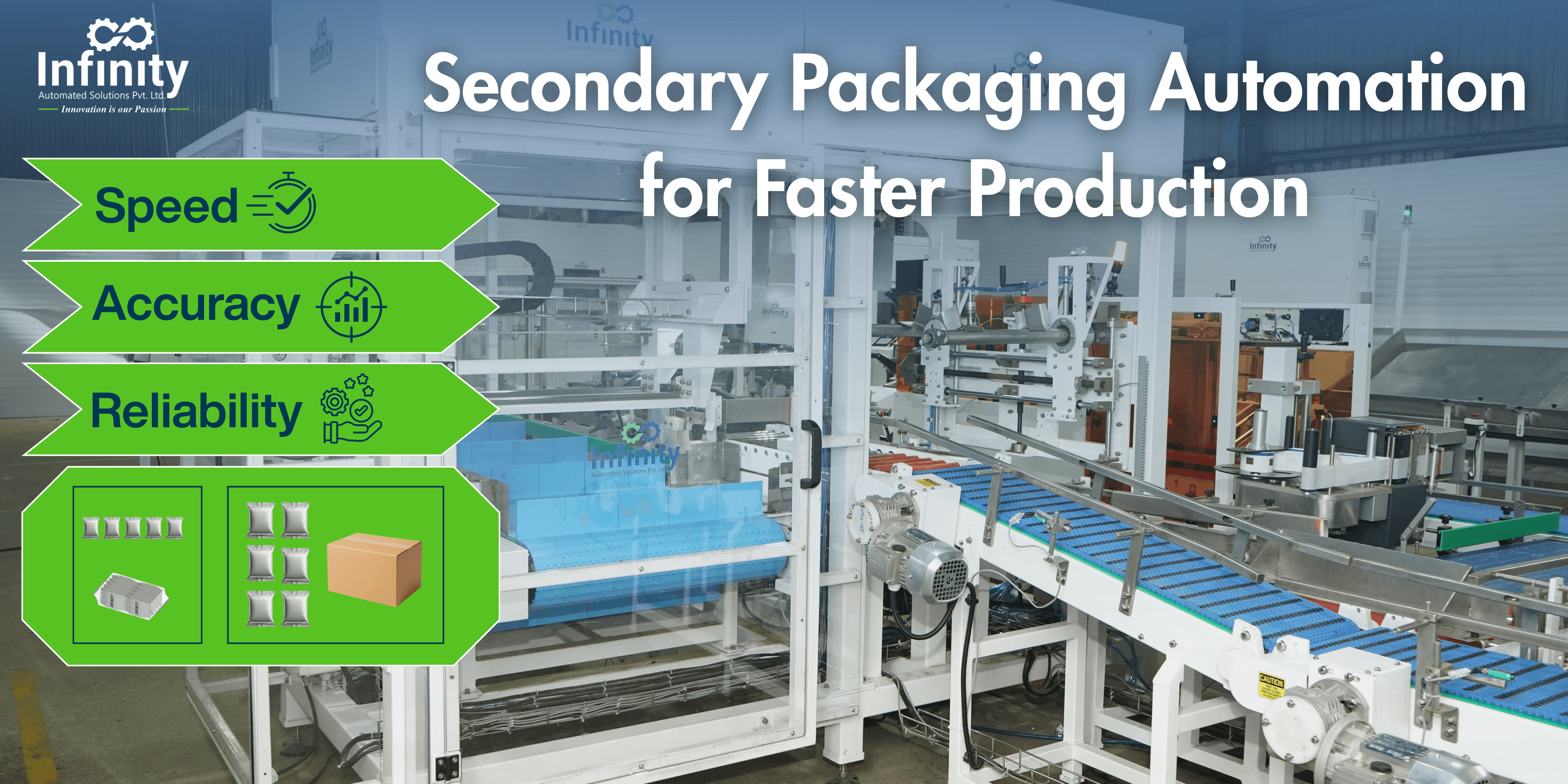
How Secondary Packaging Automation Improves Production
The global secondary packaging equipment market is growing fast. It was valued at around USD 25.34 billion in 2025 and is expected to reach USD 32.87 billion by 2030. This growth is mainly driven by the need for speed, accuracy, and automation in manufacturing. Reports also show that 67% of manufacturers already use high levels of automation at the end of their production lines, and robots are expected to be part of 95% of secondary packaging lines within the next decade.
These numbers clearly show that secondary packaging automation is no longer a future idea. It has become a core requirement for efficient manufacturing operations.
Why Secondary Packaging Automation Is Now Essential
Today, manufacturing is not just about producing goods. Companies must produce faster, package accurately, and deliver on time. Manual secondary packaging struggles to meet these demands, especially when production volumes increase or product variations grow.Secondary packaging automation solves this challenge. Automated machines handle tasks such as bundling, case packing, wrapping, strapping, and palletizing with consistent speed and accuracy. This allows manufacturers to maintain smooth production flow while reducing dependence on manual labor.
Watch Video : Secondary Packaging: Single Pouches for Tea, Spices, Sugar, Flour, Salt
How Secondary Packaging Automation Improves Production Efficiency
Higher Line Speed and Output
Automated secondary packaging machines operate at consistent speeds, often much higher than manual packing. This increases overall line output and helps manufacturers meet daily and monthly production targets without adding extra shifts or manpower.
For technical teams, this directly improves line balance and throughput, reducing bottlenecks at the end of the line.
Better Consistency and Quality
Manual packing often leads to variations such as loose wrapping, uneven cartons, or incorrect stacking. Automated systems deliver uniform packaging every cycle, reducing errors and product damage.
This level of consistency is critical in industries like food, pharmaceuticals, and FMCG, where packaging quality directly impacts product safety and brand image.
Reduced Labor Dependency and Errors
Automation significantly lowers the need for manual labor in secondary packaging. Machines do not require breaks, shift changes, or repetitive training. This reduces labor costs and also minimizes human errors caused by fatigue.
Robotic case packers, palletizers, and strapping machines take over physically demanding tasks, allowing workers to focus on machine monitoring, quality checks, and supervision.
Improved OEE and Lower Downtime
Modern secondary packaging systems support real-time monitoring and predictive maintenance. Sensors track machine performance, helping teams identify issues before breakdowns occur.
For plant managers, this means improved Overall Equipment Effectiveness (OEE), better uptime, and fewer unplanned stoppages.
Flexibility for Multiple Products
Automated systems today are designed for quick changeovers. This is important for manufacturers handling multiple SKUs, pack sizes, or seasonal demand changes.
Flexible automation helps production teams respond faster to market needs without long downtime or complex adjustments.
Why Decision Makers Are Investing in Automation
From a business perspective, secondary packaging automation delivers clear value:
• Lower long-term operating costs
• Higher and more predictable production output
• Improved packaging quality and reduced wastage
• Better workforce utilization
• Stronger readiness for future growth
While the initial investment may seem high, most manufacturers see clear ROI through efficiency gains, cost savings, and improved reliability.
Secondary packaging automation plays a major role in improving production efficiency across manufacturing plants. By increasing speed, improving consistency, reducing labor dependency, and supporting smarter maintenance, automation helps manufacturers stay competitive in a demanding market.
For companies planning long-term growth, investing in the right secondary packaging solution is no longer optional—it is a strategic decision.
Ready to Upgrade Your Secondary Packaging Line?
If you are looking to improve efficiency, reduce manual dependency, and build a future-ready end-of-line system, Infinity Automated Solutions can help.
👉 Contact our team today to discuss a customized secondary packaging automation solution designed for your production needs.