
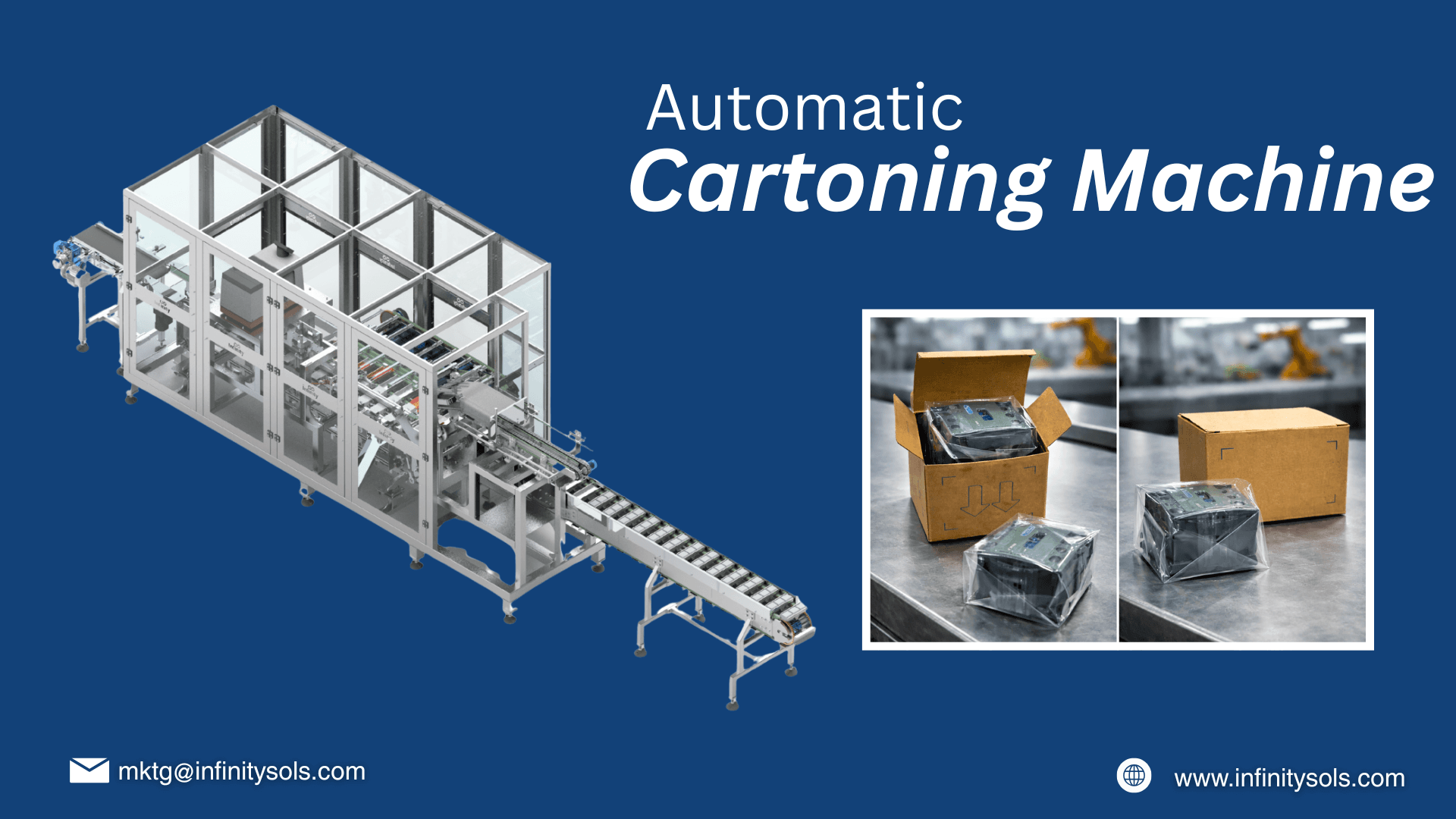
Automatic Cartoning Machine: Advanced Solution for High-Speed Secondary Packaging
An automatic cartoning machine is not just a packaging machine; it is a critical control point in modern secondary packaging lines. In industries where production volumes are high and accuracy is non-negotiable, cartoning automation ensures speed, consistency, traceability, and compliance. It acts as the bridge between primary packaging and end-of-line case packing, directly impacting operational efficiency and brand presentation.
Advanced Working Principle
An automatic cartoning machine operates through a synchronized mechanical and servo-driven system. Flat carton blanks are picked from the magazine using vacuum suction and opened through mechanical arms or rotary systems. At the same time, products such as blister packs, bottles, tubes, sachets, or pouches are indexed and aligned for precise insertion.
High-speed models use servo motors for accurate timing and smooth motion control. This reduces vibration, improves carton forming precision, and supports faster changeovers. Leaflet insertion systems can be integrated for pharmaceutical or cosmetic applications, ensuring correct literature placement before carton closing.
Carton closing can be done using tuck-in flap mechanisms or hot melt glue systems, depending on product requirements and tamper-evidence needs. Modern machines also include rejection systems that automatically remove defective cartons, such as empty boxes or improperly sealed packs.
Integration with Smart Packaging Systems
In advanced manufacturing setups, automatic cartoning machines are integrated with upstream and downstream equipment. They connect seamlessly with blister packing machines, tube filling machines, or pouch packaging lines. Downstream integration includes checkweighers, vision inspection systems, barcode scanners, and case packing machines.
Vision systems verify barcode readability, batch printing accuracy, and carton presence. This is especially important in regulated industries like pharmaceuticals. Data from the cartoning machine can also be linked to centralized monitoring systems for production tracking and performance analysis.
Manufacturers in growing production hubs such as India are increasingly investing in fully integrated cartoning solutions to meet export standards and compliance requirements.
Key Technical Features
Modern automatic cartoning machines are designed for flexibility and durability. They support multiple carton sizes with quick changeover mechanisms. Tool-less adjustments reduce downtime and improve operational efficiency.
Stainless steel construction is commonly used in food and pharmaceutical sectors to maintain hygiene standards. Machines are equipped with overload protection, jam detection sensors, and emergency stop systems for safety.
High-speed cartoning machines can operate at hundreds of cartons per minute, depending on product type and configuration. This makes them ideal for FMCG and pharmaceutical mass production environments.
Business Impact of Automation
Investing in an automatic cartoning machine significantly improves packaging line efficiency. It reduces manual labor, minimizes human error, and ensures uniform carton presentation. Consistent secondary packaging enhances brand image and builds customer confidence.
Automation also reduces material wastage by ensuring precise carton forming and sealing. When integrated with case packers and palletizing systems, it creates a fully automated end-of-line solution that supports higher throughput and lower operational costs.
Companies like Infinity Automated Solutions Pvt Ltd provide advanced end-of-line automation solutions, including automatic cartoning machines integrated with conveying systems, checkweighers, and case packers for high-performance packaging operations.
Conclusion
An automatic cartoning machine is a strategic investment for manufacturers aiming to scale operations while maintaining strict quality standards. With advanced servo control, smart integration capabilities, and high-speed performance, it plays a vital role in modern secondary packaging systems. As demand for faster and more reliable packaging grows, advanced cartoning automation becomes essential for competitive and compliant manufacturing.